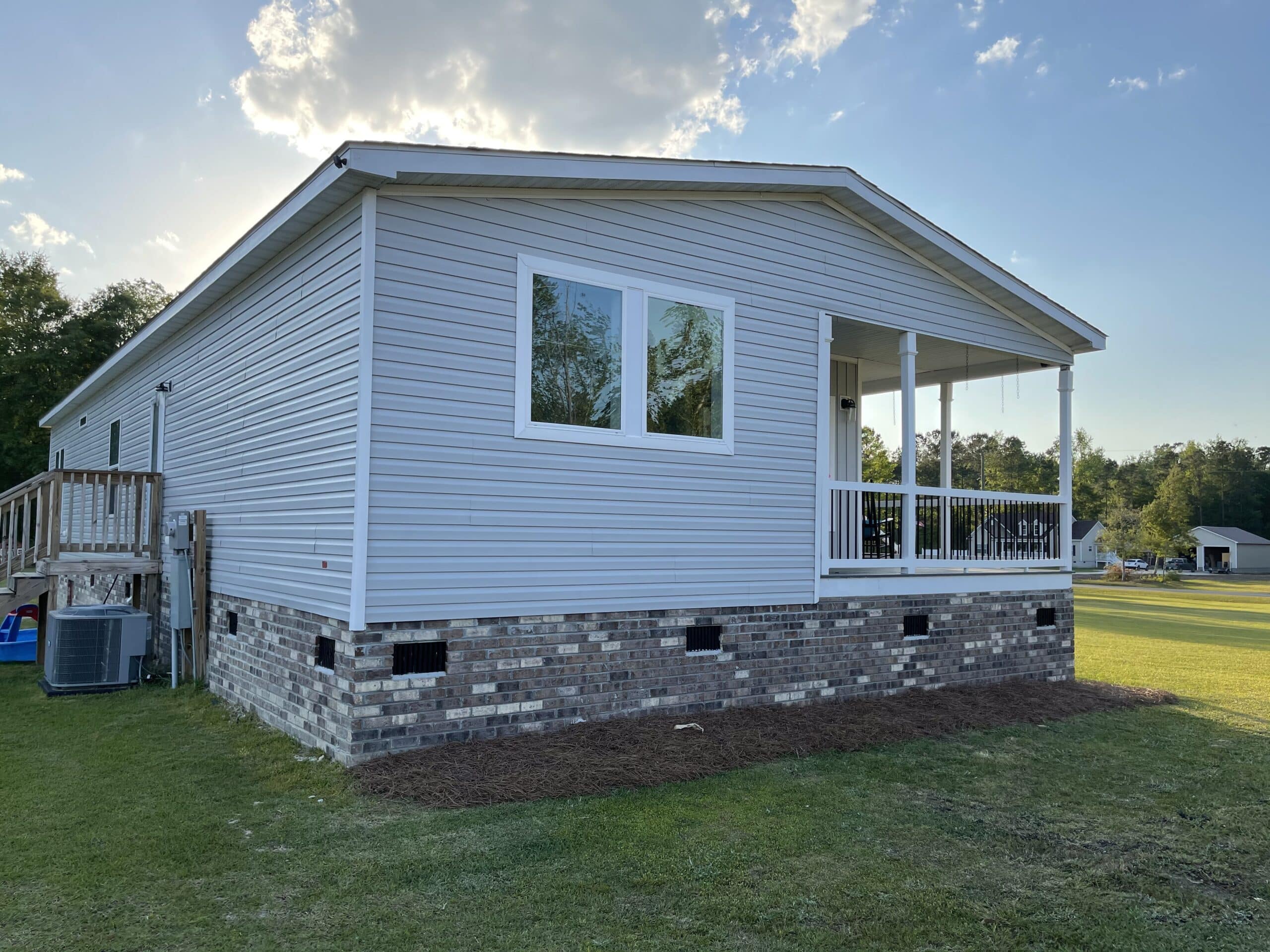
Key Takeaways
- Manufactured homes must meet HUD permanent foundation requirements to qualify for many FHA, VA, and conventional loans.
- Missing or improperly installed tie-downs and anchoring systems are one of the most common reasons homes fail foundation certification.
- Improperly spaced or unstable foundation piers and footings can prevent a home from meeting structural requirements.
- Foundations must safely transfer structural loads from the home to the underlying soil or rock.
- A licensed professional engineer must review the foundation and issue certification confirming manufactured home foundation compliance with HUD standards.
- If a manufactured home fails certification, repairs or corrections may be required before financing can proceed.
You’ve probably heard the saying, “A house is only as good as its foundation.” Well, when it comes to manufactured homes and the banks that fund them, that isn’t just a metaphor—it’s a legal requirement.
At PHIfoundationcerts.com, we see it all the time. A homeowner is just days away from closing on a sale or a refinance when the engineer’s report comes back with a “Non-Compliance” notice. It feels like a punch in the gut. You look at your home and think, “It’s been sitting here just fine for twenty years, what do you mean it failed?”
The truth is, most manufactured homes are installed to “Standard Set-up” codes, but HUD’s Permanent Foundation standards (the ones FHA and VA loans require) are a much higher bar. Most “fails” aren’t because the home is dangerous; it’s because it’s missing the specific structural “upgrades” that turn a trailer into real estate.
Let’s walk through the most common reasons we see homes fail their foundation certification and, more importantly, how you can fix them.
Also see – What Is a Manufactured Home Foundation Certification? (And Why Everyone’s Asking for One).
1. The “Add-On” Headache (Decks, Porches, and Carports)
This is, by far, the #1 reason for a failed certification. I see it in almost every other inspection.
Here is the deal: Manufactured homes are engineered at the factory to be a “closed system.” The frame is designed to hold the weight of the house and nothing else. When a homeowner decides to bolt a beautiful 12×20 deck or a heavy wooden porch directly to the side of the home, they are transferring the “load” of that deck onto the home’s frame.
The HUD Rule: Any addition must be completely self-supporting. In human terms, that means if I were to magically vanish your house, the deck should still be standing on its own four legs.
- The Problem: The deck is bolted to the rim joist of the home without support posts right next to the house.
- The Fix: You don’t have to tear the deck down. A contractor can usually install “helper posts” (pressure-treated 4x4s) right against the side of the home so the deck’s weight goes into the ground, not into your house.
2. Missing or Loose Tie-Downs and Anchors
If gravity was the only force we dealt with, foundations would be easy. But HUD is worried about Wind Uplift. They want to know that if a hurricane-force wind hits your home, it isn’t going to flip over or slide off its blocks.
Depending on where you live (especially here on the South Carolina coast), you are in a higher “Wind Zone.” This means you need more anchors than a home in the mountains.
- The Problem: The metal straps are loose, rusted through, or there simply aren’t enough of them to meet the current wind zone map. We often see “slack” in the straps—if you can wiggle it with your hand, it’s not doing its job.
- The Fix: A specialized tie-down contractor can “tension” your existing straps or install new ones. It’s a dirty job, but it’s a standard fix that takes about half a day.
3. Drainage and “Ponding” Under the Home
Water is the enemy of any foundation. If water pools under your home, the soil becomes soft (engineers call this “unstable”). When soil gets soft, your concrete piers start to sink or tilt.
- The Problem: The ground under your home is lower than the yard around it, creating a “bowl” that collects rain. Or, your gutters are dumping water right next to the skirting.
- The Fix: You need to ensure the ground “slopes” away from the home—at least 6 inches of drop over the first 10 feet. Sometimes this requires bringing in a few loads of dirt or installing a French drain. Also, make sure your gutter downspouts carry water at least 5 feet away from the home.
4. Improper Pier Construction (Dry-Stacked Blocks)
Most manufactured homes sit on stacks of concrete blocks. In a standard setup, these blocks are often “dry-stacked” (just piled on top of each other).
- The Problem: HUD requires “Permanent” piers. Dry-stacked blocks can vibrate loose over time.
- The Fix: To make them permanent, they usually need to be “mortared” or covered in a fiber-reinforced surface-bonding cement. This “locks” the blocks together so they act as one solid pillar.
5. The “Tongue and Axle” Issue
Remember how we talked about turning a “vehicle” into “real estate”? If your home still has the towing hitch (the tongue), the axles, or the wheels attached, the bank sees it as a vehicle that could be driven away tomorrow.
- The Problem: The hitch is still sticking out from under the skirting, or the axles are still bolted to the frame.
- The Fix: These must be removed. Most hitches are bolted on and can be removed with a big wrench; some are welded and need to be cut off with a torch. Once they are gone, the home is “de-titled” and officially part of the land.
6. Skirting and Perimeter Enclosures
For a foundation to be considered permanent, the crawlspace must be fully enclosed. This isn’t just for looks; it keeps out moisture, wind, and critters.
- The Problem: The skirting is made of flimsy vinyl that is holes in it, or it’s not properly supported. Also, a big fail point is the lack of ventilation. You need 1 square foot of vent space for every 150 square feet of floor area.
- The Fix: Repair any holes and ensure there are enough vents to prevent mold and rot from building up under your floors.
7. Footings That Don’t Go Deep Enough
In many parts of the country, the ground freezes in the winter. If your concrete footings (the pads the piers sit on) are shallow, the “frost heave” will push your house up and down, causing cracks in your walls.
- The Problem: The footings are just sitting on top of the grass or aren’t deep enough to get below the “frost line.”
- The Fix: This is one of the tougher fixes, often requiring a contractor to “jack” sections of the home to pour deeper concrete footings. It’s why we always recommend checking this before you buy.
How to Prepare for Your Inspection
If you want to pass on the first try, do a “pre-crawl” yourself (or send a brave teenager under there). Look for the following:
- Is it dry? If there is standing water, fix your drainage first.
- Are the straps tight? Give them a tug.
- Is the deck attached? If you see bolts going from your porch into the house, call a handyman to add some support posts.
- Are the “tags” there? Find the red HUD labels on the outside of the home. If they’re missing, we’ll need to order a verification letter, which takes time.
Also see – Why Loans Require A FHA Manufactured Home Foundation Certification.
Frequently Asked Questions (FAQ)
What causes a manufactured home to fail foundation certification?
Common issues include missing tie-downs, unstable piers, inadequate footings, improper anchoring, and structural additions that affect the foundation system.
Does a “Fail” mean I can’t get the loan?
Not at all! It just means some “retrofitting” is required. Most of these issues can be fixed by a handyman or a specialized manufactured home contractor in a few days. Once the fix is made, we re-inspect (or review photos) and issue the certification.
Are tie-downs required for mobile home foundation certification?
Yes. HUD installation standards require manufactured homes to be anchored to resist wind loads and structural movement.
How much do the repairs usually cost?
It varies. Adding a few support posts to a deck might cost $200–$400. Re-doing a whole anchoring system for a double-wide could be $5000–$10,000.
Do foundation piers affect certification?
Yes. Improperly spaced, unstable, or damaged piers can cause a manufactured home to fail foundation certification because they may not properly support structural loads.
Why didn’t my regular home inspector catch this?
A standard home inspection is a visual evaluation and does not determine whether a manufactured home foundation meets HUD permanent foundation standards. Foundation certifications require measurements, documentation, and review by a licensed engineer, which is outside the scope of most home inspections.
Can additions cause a manufactured home to fail certification?
Yes. Decks, porches, or room additions can affect structural support and may prevent a foundation from meeting HUD permanent foundation standards.
My home is brand new. Does it still need a certification?
Yes. Even a brand-new home must be certified as being installed correctly on that specific site. The factory engineers the home, but a local engineer must certify the foundation.
Can I leave the hitch on if I cover it with skirting?
No. Simply covering the hitch with skirting does not meet HUD permanent foundation requirements. The hitch (tongue) typically must be removed or properly modified for the home to qualify for foundation certification.
What if I can’t find my HUD Data Plate?
If the HUD Data Plate is missing, the information can usually be obtained from the HUD Label Verification Letter using the red HUD label numbers attached to the exterior of the home. This letter confirms the home’s construction details and compliance with HUD standards.
Can a manufactured home pass certification after repairs?
In many cases yes. Once foundation problems are corrected, the home can be re-evaluated and may receive certification if it meets HUD requirements.
Final Thoughts
At the end of the day, the foundation certification process is about protecting your investment. While it feels like a hurdle, it ensures that your home is safe, permanent, and holds its value as real estate.
If you’re worried about mobile home foundation certification failure, or if your lender just told you that you need a cert “yesterday,” give us a shout. At PHIfoundationcerts.com, we’re here to help you navigate the dirt so you can enjoy the house.