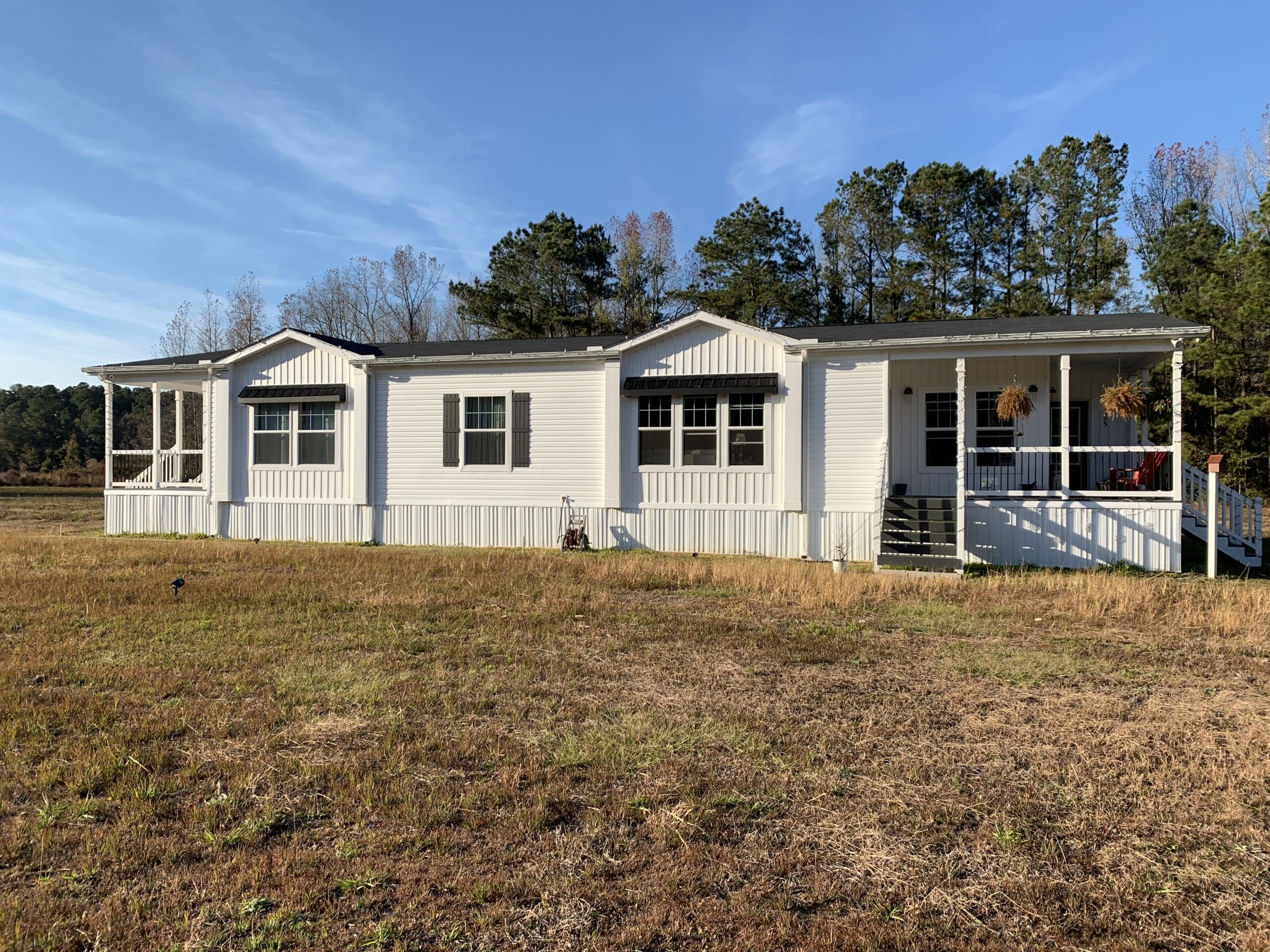
Key Takeaways
- FHA and VA loans require manufactured homes to be installed on a permanent foundation.
- The foundation must comply with HUD’s Permanent Foundations Guide for Manufactured Housing.
- A licensed professional engineer must certify that the manufactured home foundation meets the HUD foundation standards.
- Without this FHA Manufactured Home Foundation Certification, many lenders cannot approve financing for the manufactured home.
So, you’ve finally found the perfect spot. Maybe it’s a double-wide with a killer view of the South Carolina coast, or a quiet spot tucked back in the pines where the neighbors are mostly squirrels. You’ve got your pre-approval in hand, you’ve picked out the furniture in your head, and you’re ready to sign on the dotted line. Then, out of nowhere, your loan officer drops the “F-bomb”—the Foundation Certification.
If you’re using an FHA or VA loan, this isn’t just a suggestion or a “best practice”; it’s a non-negotiable, hard-stop requirement. And honestly? It can feel a bit personal. You look at the home and see a solid, beautiful structure where you’re going to raise your kids or enjoy your retirement; the bank looks at that same home and sees a “collateral risk” that might just slide off its blocks in a heavy thunderstorm.
At PHIfoundationcerts.com, we spend a lot of our time helping folks bridge that gap between “it looks fine to me” and “it meets federal law.” Let’s sit down and talk about why these government-backed loans are so incredibly picky and what they’re actually trying to protect (besides their own bottom line).
The Legal “Shape-Shifting” of a Manufactured Home
To understand why FHA and VA are so obsessed with your foundation, you have to understand a weird quirk of the law that most people don’t find out until they’re in the middle of a closing.
When a manufactured home is built in a factory, it’s technically “personal property.” In the eyes of the government, it’s basically a very fancy, very large vehicle. It has a title, just like your Ford F-150. But banks don’t like giving out 30-year mortgages for vehicles. Why? Because you can drive a truck across state lines or hide it in a barn. They give 30-year mortgages for Real Estate.
The Engineer Foundation Certification is the legal “magic wand” that performs a transformation. It turns “personal property” into “real property.” When a licensed Professional Engineer (P.E.) signs that seal, they are telling the bank, “This home is now part of the Earth. It isn’t a vehicle anymore; it’s a permanent improvement to the land.” Without that seal, the bank can’t guarantee the home is permanently part of the property. If it isn’t “real property,” they can’t offer you those sweet, low-interest, long-term government rates that make manufactured housing so affordable.
The FHA Angle: Protecting the “Safety Net”
FHA (Federal Housing Administration) loans are a absolute lifesaver for many families because they allow for lower down payments and are a bit more forgiving with credit scores. But there’s a trade-off. Because the government is essentially “co-signing” for you by insuring the loan, they have some very loud, very specific opinions on how that home is secured.
The HUD-4930.3G “Bible”
The FHA follows a specific guidebook with a very boring name: the Permanent Foundations Guide for Manufactured Housing (officially HUD-4930.3G). It’s a dry, technical manual full of math and soil charts, but it is the “law of the land” for us.
FHA requires an engineer to certify that your home meets these standards for one big reason: Serviceability. If a foundation is weak or “un-certified,” the home will eventually settle. When a manufactured home settles unevenly, the doors stop closing, the windows stick, the drywall cracks, and the roof starts to leak. Over 30 years, an improperly secured home can become a total loss. FHA wants to make sure you aren’t stuck with a house that’s literally falling apart from the ground up, leaving the government holding the bag on a bad loan.
The VA Angle: Protecting Those Who Served
The Department of Veterans Affairs has a slightly different mission than the FHA. Their goal is to ensure our veterans and active-duty members are moving into homes that are safe, structurally sound, and sanitary.
VA appraisers and underwriters are famously thorough. They don’t just want to know the home is “permanent”; they want to know it meets Minimum Property Requirements (MPRs). This is about more than just some bolts in the ground; it’s about the quality of life for the veteran.
When a VA-approved engineer looks at a foundation, they are checking for:
- The “First Move” Rule: This is a big one. Generally, for a VA or FHA loan, the home must be in its original location. If it was set up in a park in 2010 and moved to a private lot in 2024, it likely won’t qualify. They want to know the “chassis” (the steel frame) hasn’t been stressed by multiple trips down the highway.
- Proper Enclosure: The skirting needs to be more than just pretty. It has to be a “perimeter enclosure” that keeps out moisture and pests. If a veteran’s crawlspace is full of standing water because of bad grading, that’s a health and safety fail.
For a veteran, the foundation cert is actually a great piece of protection. It’s an expert telling you, “Yes, this home is a safe place for your family to live for the next three decades.”
Why Do Most Homes Fail the First Time?
I hate to use the word “fail.” Let’s call them “opportunities for a retrofit.” Most manufactured homes—especially older ones—weren’t originally installed to HUD’s permanent standards. They were installed to “Manufacturer’s Specifications,” which are often much looser.
Here are the “Big Three” reasons we see certifications hit a snag at PHIfoundationcerts.com:
1. The “Add-On” Trap (Decks and Porches)
This is the number one “deal-killer” we see. Imagine the previous owner built a beautiful, heavy wooden deck or a massive wrap-around porch. If they bolted that deck directly to the home’s rim joist without giving the deck its own “legs” (support posts) right next to the house, it’s a fail.
- The Logic: HUD rules say the home cannot support any external weight. The deck must be self-supporting.
- The Fix: Don’t panic. You don’t have to tear it down. Usually, we just need a contractor to add a few 4×4 posts under the side of the deck closest to the home. It’s a simple fix, but it’s one that must be done before the seal is issued.
2. Wind Zone Math
In South Carolina, we have a lot of “Wind Zone 2” areas because of the hurricanes. A home that was perfectly fine in a field in Ohio would fail miserably on the coast of SC.
- The Issue: Many homes don’t have enough tie-down straps or the right kind of “ground anchors” to resist the uplift and lateral forces of a coastal storm.
- The Fix: A specialized contractor can crawl under and add the necessary anchors. It’s a bit of a workout for them, but it’s standard practice.
3. Drainage and “Soft Soil”
If the ground under the home stays wet, the footings will sink. We see a lot of homes where the “skirting” is buried in the dirt, causing water to pool under the house.
- The Logic: If the soil gets soft, those concrete blocks (piers) will tilt. If the piers tilt, the house moves. If the house moves, the foundation isn’t permanent.
The Cost of Waiting: Why “Last Minute” Is a Disaster
In the world of real estate, everybody is in a hurry. But for some reason, lenders often wait until the very end of the process—sometimes just days before the scheduled closing—to ask for the manufactured home foundation certification.
This is a recipe for a heart attack. If you wait until the last minute and we find out you need $1,500 worth of extra anchors or a deck retrofit, you are going to be scrambling. You’ll be trying to find a contractor who can work on 24 hours’ notice while your moving truck is already parked in your driveway and your kids are asking why they can’t go inside.
By getting PHIfoundationcerts.com involved as soon as you go under contract, you give yourself “breathing room.” If the home is perfect, great! We get you the paperwork and you’re a hero. If it needs work, you have weeks to get it fixed and potentially negotiate with the seller to cover the cost.
The “Hidden Benefit” for Sellers
If you’re the one selling the home, you might be annoyed that you have to deal with this. But look at it this way: having a “certified” foundation makes your home way more valuable.
When a home is certified, it opens up the buyer pool to everyone using FHA, VA, and USDA loans. Without it, you’re stuck waiting for a “cash buyer” or someone with a very expensive personal loan. By certifying the foundation, you’ve basically “upgraded” your home from a piece of property into a piece of real estate. That’s a huge win for your resale value.
What Happens During Our Visit?
When you call us out, we aren’t there to judge your lawn or check your plumbing. We have a very specific “mission” under the home. We’re going to:
- Locate the HUD Tags: Those little red metal plates on the exterior. They are the “birth certificates” of the home.
- Crawl the Perimeter: We check every inch of the skirting and the tie-downs.
- Measure the Piers: We check the spacing and the material of the supports.
- Inspect Additions: We look at every porch, deck, and carport to see if they are “leaning” on the house.
- Verify the Data Plate: This is a paper map (usually inside a kitchen cabinet) that tells us what Wind Zone the house was built for.
Once we have that data, our Professional Engineer sits down and does the math. If it passes, we send the seal to your lender immediately.
Also see – Common Problems That Cause Manufactured Homes to Fail Foundation Certification
Frequently Asked Questions (FAQ)
Why do FHA loans require a manufactured home foundation certification?
FHA loans require foundation certification to verify that a manufactured home is permanently installed and meets HUD structural and anchoring standards.
Do VA loans require foundation certification for manufactured homes?
Yes. VA loans often require a manufactured home foundation certification to confirm the home meets permanent foundation requirements.
Who issues a mobile home foundation certification?
A licensed professional engineer reviews the inspection documentation and issues the official foundation certification.
What happens if the foundation does not meet HUD requirements?
If the foundation does not meet HUD standards, repairs or modifications may be required before certification can be issued.
How long does a manufactured home foundation certification take?
The inspection usually takes about 30 minutes, and the engineer certification is typically issued within a few days.
Does it matter how old the home is?
Yes! If it was built before June 15, 1976, it’s a “Mobile Home,” and it won’t qualify for FHA/VA financing regardless of the foundation.
How long does the certificate last?
As long as the home isn’t moved or the foundation modified, it’s generally good for the life of the loan.
What are the permanent foundation requirements for manufactured homes?
A permanent foundation for a manufactured home must securely anchor the structure to the ground and transfer loads to the soil in accordance with HUD standards.
Final Thoughts: It’s About Peace of Mind
I know it feels like another fee and another hoop to jump through. But at the end of the day, these FHA and VA rules aren’t just there to be annoying. They are there because they’ve seen what happens when a manufactured home isn’t properly secured.
A HUD permanent foundation certification is your “structural insurance.” It’s the peace of mind that when the wind picks up or the ground gets saturated, your home is staying exactly where you put it.